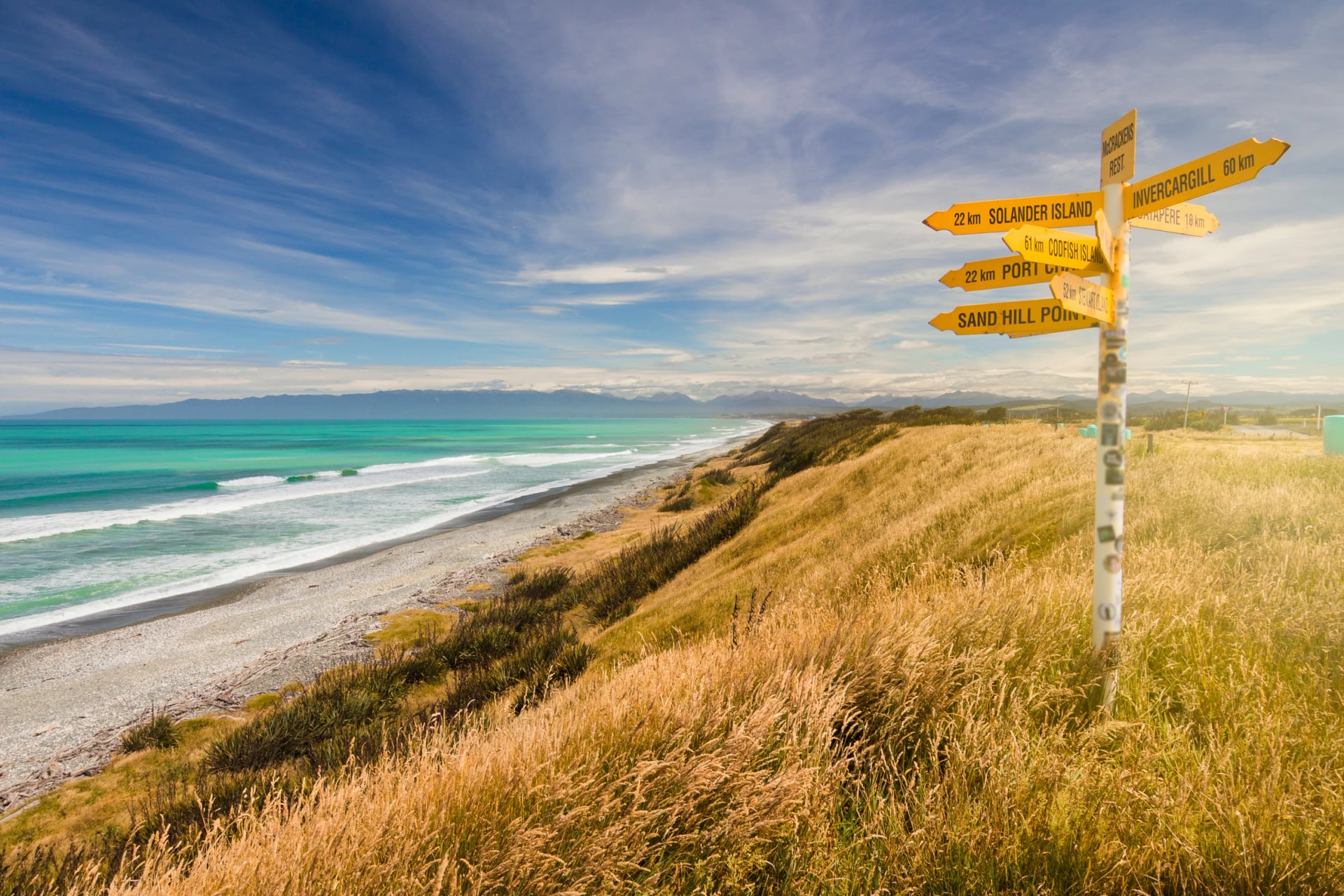
What Is the Best Time to Hike in New Zealand?
The best time to hike in New Zealand comes down to one month, once you line up the weather records and every Great Walk's dates.
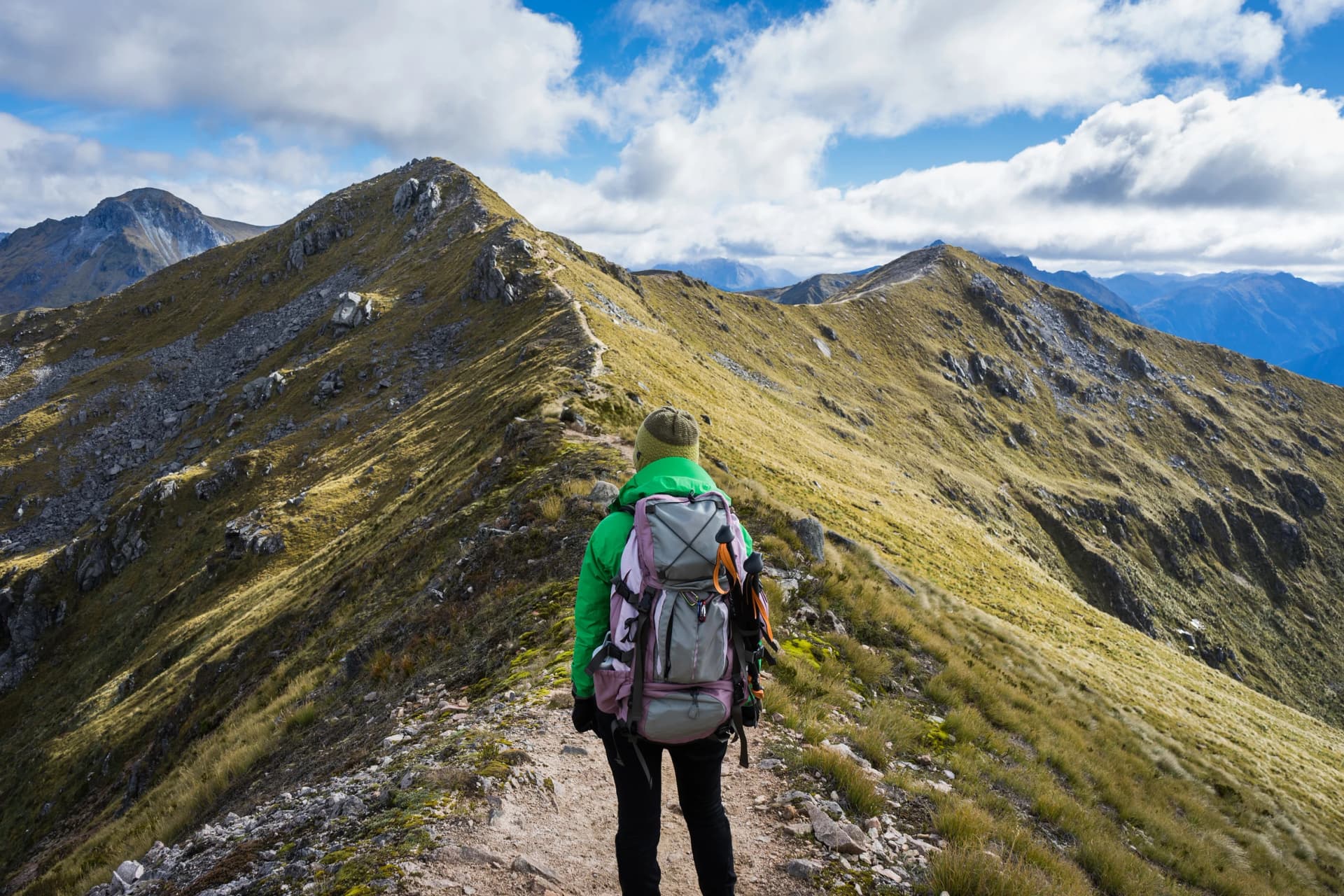
Don't want to read all this?
We've planned 2,000+ hiking trips. Send your dates, fitness and group size — we'll map the route and book every night.



New Zealand runs from subtropical Northland to the alpine south, with eleven Great Walks and about 950 huts between them. Pick the wrong month and you can meet a snowed-in pass or a closed lodge as well as a wet day.
To find the best time to hike in New Zealand, we went to the weather records: NIWA's 30-year normals for rain and temperature at 30 stations, from Kaitaia in the far north to Invercargill in the far south. One month comes out driest at 10 stations and warmest at 19, more than any other month on both counts, and schools are back by then too. The table below shows which one, and where to walk in the other eleven.
The Seasons in a Few Facts
Summer falls at Christmas: December to February, with winter from June to August.
Daylight swings by seven hours: Queenstown gets about 15.6 hours in late December and 8.8 hours in late June.
Passes run colder than valleys: NIWA's rule is about 0.7 °C lost per 100 m, so a 1,000 m saddle sits 7 °C below the valley floor.
The sun burns fast: NIWA rates midday summer UV as often very high, and extreme in the north and the mountains.
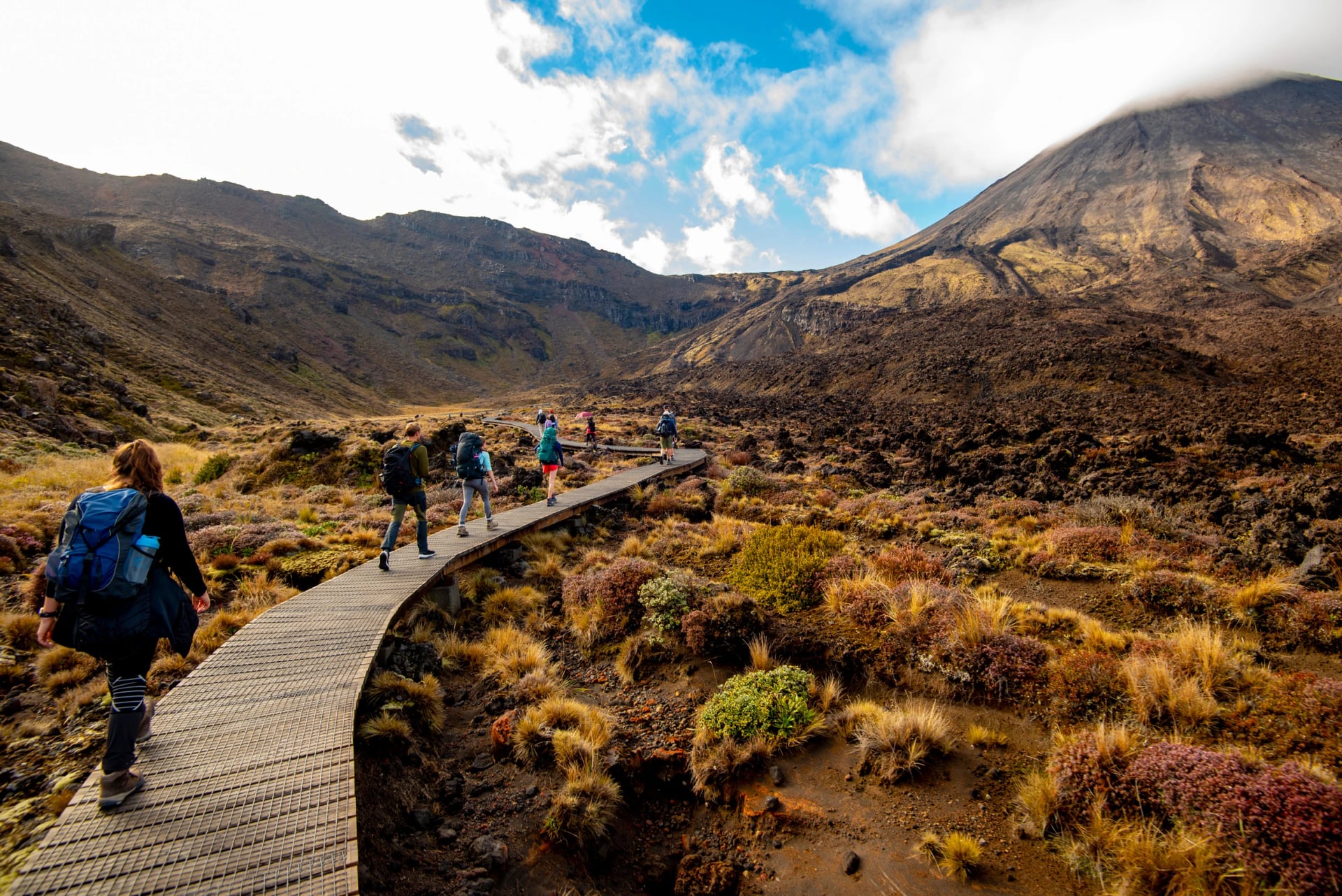
New Zealand Hiking Season
Most people call the New Zealand hiking season October to April, but each track keeps its own hours: a high Fiordland pass opens weeks after a sheltered beach. So the best time to visit New Zealand for hiking depends on your track as well as your month, and this table gives our pick for each one. Our guide to hiking in New Zealand covers each region.
Month | Where to Walk | What to Expect |
January | Every region | Warm, long days, and holiday crowds until schools return |
February | Every region, our first pick | Warm and dry, and the first month to sell out |
March | Fiordland, Otago, Tongariro | Settled days, Easter from 26 March in 2027 |
April | Coast tracks, Otago lakes | Cold nights, new snow up high, school break 10 to 26 April 2027 |
May | Coast tracks, Northland | High tracks out of season, quiet huts |
June | Abel Tasman, Northland | Shortest days, mild in the north |
July | Abel Tasman, Northland | Coldest month, wettest in the north, school break 3 to 18 July 2027 |
August | Abel Tasman, Northland | Deep snow in the mountains, days drawing out |
September | Coast tracks, Northland | Snow still on the passes, wind picking up |
October | Coast tracks, Tongariro from the 23rd | Westerlies and full waterfalls |
November | Coast tracks, Fiordland from the 1st | Long quiet days, snow patches on the passes |
December | Every region by mid-month | Long evenings, summer holidays begin |
So February is the best time to hike in New Zealand. If its huts and lodges are already full, March keeps most of the warmth, with the summer holidays further behind you.
Coast tracks here mean the Abel Tasman and the Queen Charlotte, both walkable all year.
The Four Seasons
Most temperature ranges online mix every region. These cards use NIWA's 1991 to 2020 normals with the station named, so compare your month with the town nearest your walk.
Queenstown reaches 17.5 °C by November, up from 13 °C in September, and Auckland climbs from 16.5 °C to 19.6 °C. Snowmelt fills the rivers and waterfalls, yellow kōwhai comes into flower, and lupins colour Lake Tekapo's shore by late spring.
NIWA calls spring normally the windiest season, so stay low until the alpine huts open.
February highs reach 24.4 °C in Auckland and 18.7 °C in Invercargill, yet a Queenstown night still drops to about 9.5 °C. Every Great Walk is in season, and at Christmas the far south stays light until about 9:30 pm.
Does New Zealand have an autumn? Yes, and March may be its best month on foot, with highs of 21.2 °C in Nelson and 19.1 °C in Queenstown.
By May, Queenstown reaches only 11.9 °C and the tops carry new snow. Most native trees are evergreen, so the gold in your photos will be planted trees around Arrowtown.
Stay low.
In July Queenstown averages 8.2 °C by day and −1.4 °C at night, while Nelson manages 12.7 °C and Auckland 14.6 °C.
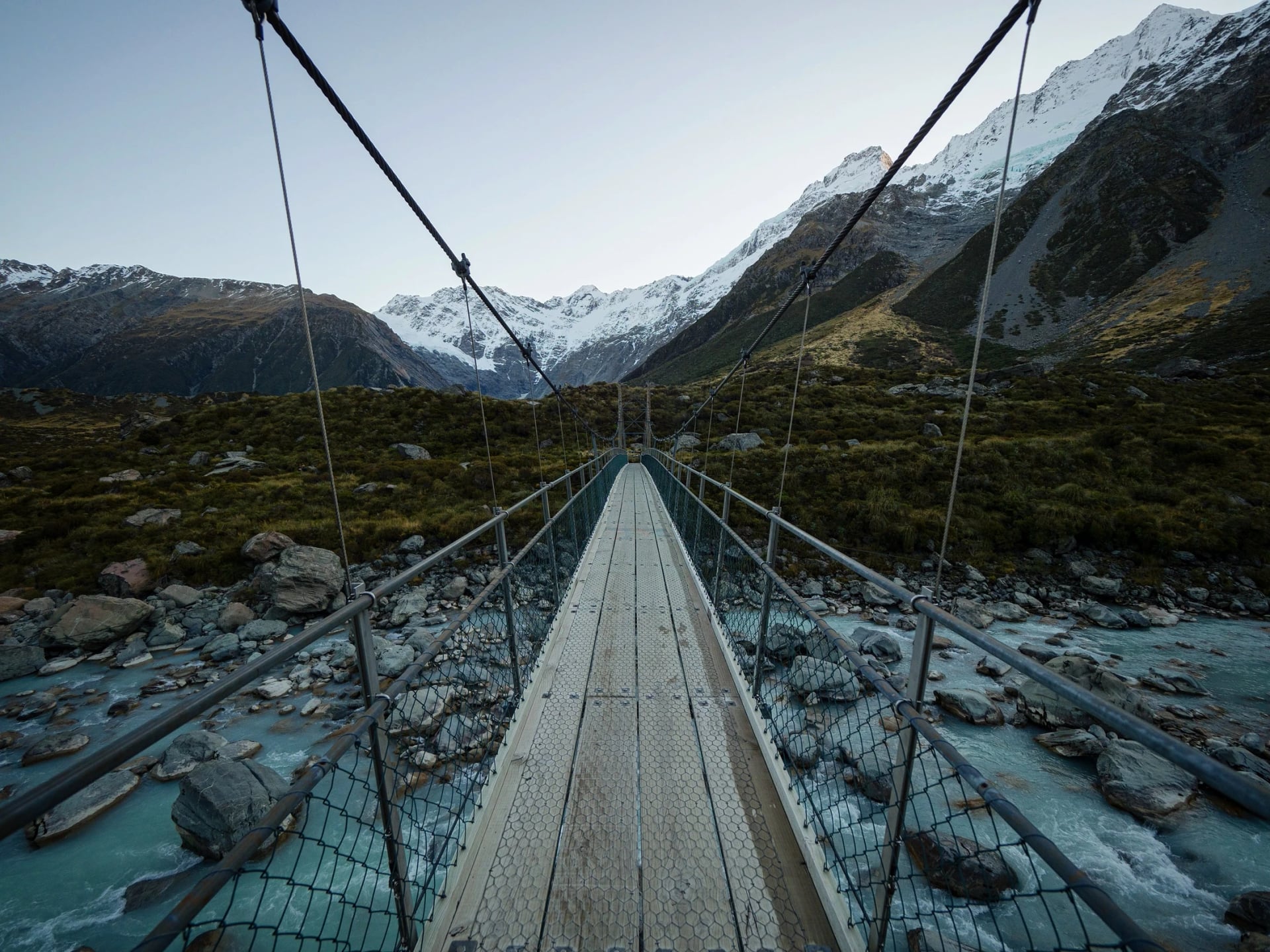
The sheltered coasts stay walkable. Higher up, shaded paths turn icy: DOC recommends microspikes and poles on the Hooker Valley Track, and snow can limit the road to Aoraki/Mount Cook.
School Holidays and Crowds
Crowds follow the school calendar, because New Zealanders walk in their own holidays. The Ministry of Education has schools breaking up by 18 December 2026 and returning between 28 January and 3 February 2027, and DOC says those summer holidays are most people's first pick. Walk midweek around the Waitangi long weekend, 6 to 8 February 2027.
North vs South Island
Your best month moves with the island you land on, so choose the island first.
North Island | South Island | |
Best Months | November to April | Mid-December to March |
What Decides It | Winter rain | Snow on the passes |
Driest Month | January, Auckland 58 mm | March, Queenstown 49 mm |
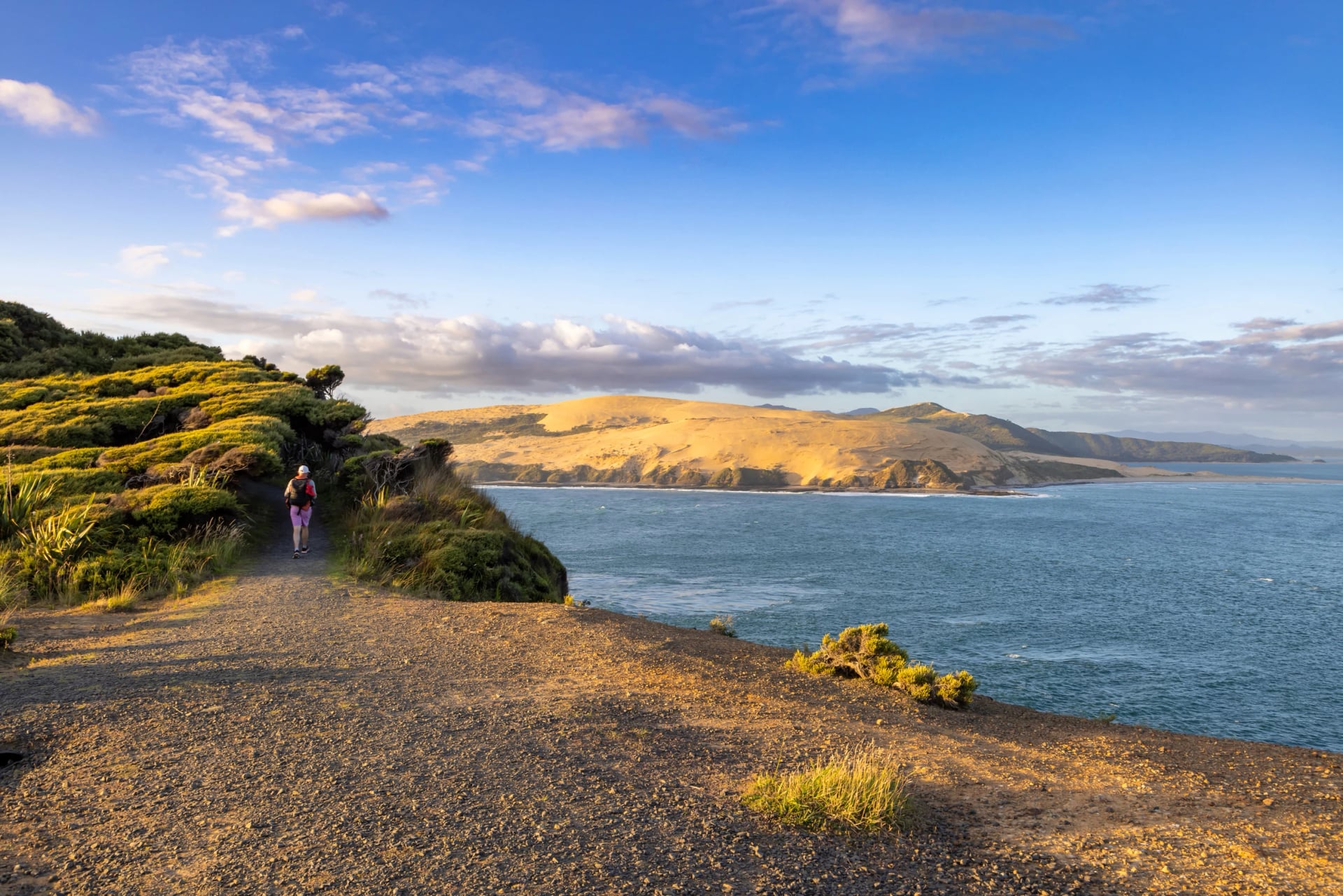
North Island coasts suit the shoulder months. Rain falls mostly in winter, so November and April both work, and Kaitaia still reaches 15.4 °C in July. Only Tongariro's high ground keeps to the alpine calendar.
South Island passes need high summer. If you are choosing between March, April and May, take March: Queenstown loses 3 to 4 °C a month after it, and the alpine Great Walks stop at the end of April. The west stays wet whatever the month. Milford Sound takes 6,545 mm of rain a year and January is its wettest month, so never wait there for a dry week, while Blenheim, east of the mountains, takes 639 mm. Evenings help too: sunset at Te Anau in mid-February is about 9 pm.
Great Walks Season Dates
Inside its season a Great Walk has wardens and bookable bunks. Outside it, the alpine tracks lose most hut services, Milford loses many side-stream bridges, and DOC asks for alpine skills. If a Great Walk is the reason for your trip, let these dates set your month. They are for 2026/27, read on 4 November 2026 on the DOC Great Walks pages and the Hump Ridge Trust's site, and each year's dates come out with its bookings.
Great Walk | 2026/27 Season | Rest of the Year |
Whanganui Journey | 1 Oct to 30 Apr | Expert canoeists only |
Abel Tasman Coast Track | 1 Oct to 30 Apr | Open, booked all year |
Heaphy Track | 1 Oct to 30 Apr | Open, booked all year |
Paparoa Track | 1 Oct to 30 Apr | Open, check for snow and ice |
Rakiura Track | 1 Oct to 30 Apr | Open, booked all year |
Lake Waikaremoana | All year | Water taxi stops in winter |
Tongariro Northern Circuit | 23 Oct to 30 Apr | Alpine skills only |
Hump Ridge Track | 23 Oct to 17 Apr | Closed |
Kepler Track | 27 Oct to 30 Apr | Alpine skills only |
Milford Track | 1 Nov to 30 Apr, last start 28 Apr | Alpine skills only |
Routeburn Track | 1 Nov to 30 Apr | Alpine skills only |
Early weeks are colder and riskier. On the Milford and Kepler, DOC warns that avalanche risk can last into December, and snow and ice can make the Routeburn hazardous early and late in its season. For the tracks booked all year, the dates mark DOC's peak season. Our Great Walks guide compares all eleven.
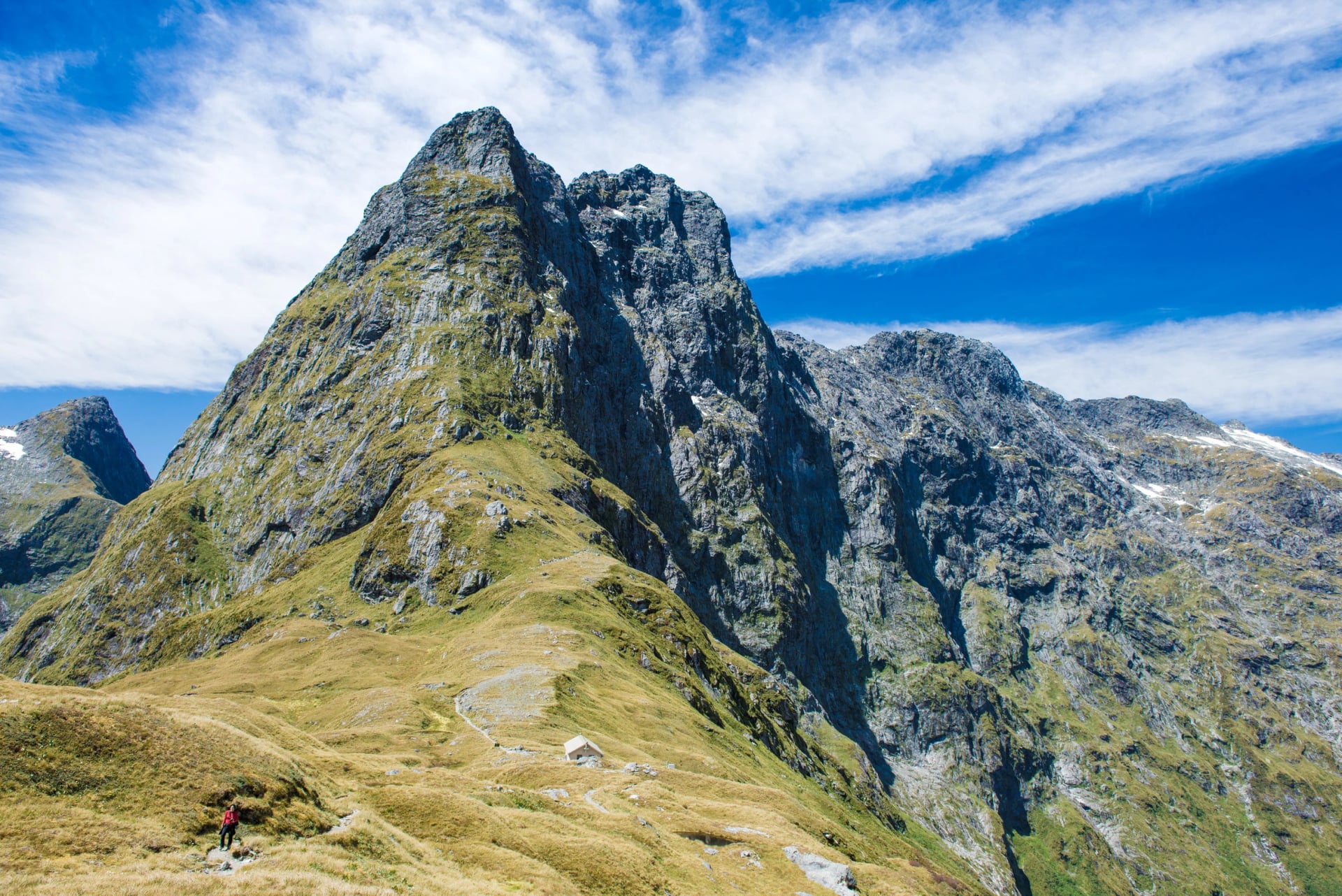
The earliest close is in the far south. The Hump Ridge closes on 17 April, and its 60 km loop climbs to Ōkaka Lodge at 835 m, above the tree line, where a clear February day counts for most. It takes three days on the track, with a lodge bunk each night.
Getting those bunks, the Tuatapere shuttle and the Trust's briefing to line up on one date is the hard part, and on our tours we handle it: we work directly with the Hump Ridge Trust and stay in touch while you walk. Take a look:
Which Month Suits You?
Our agents know which weeks still have space in every month of the season. Which ones do you have in mind? Send us your dates.
Frequently Asked Questions



Plan with a hiking expert
Free advice from a team that knows these routes inside out - real people, not a bot

HASSLE-FREE
We handle itineraries, accommodations, and anything else you prefer not to deal with, so you can enjoy a carefree hike.

BOOK WITH CONFIDENCE
We are a financially protected company, fully bonded and insured, keeping your money safe and allowing you to travel with confidence.

TRIED & TESTED ADVENTURES
We picked each walk only after checking it stage by stage, from the boat timetables to the lodge at each stop.

SUPPORT ON THE TRACK
Our support number is in the guidebook we give you, for a missed boat or a change of plan. In an emergency, dial 111, free from any phone.